The Complete History of Artificial Intelligence: Ancient Myths to GPT-4
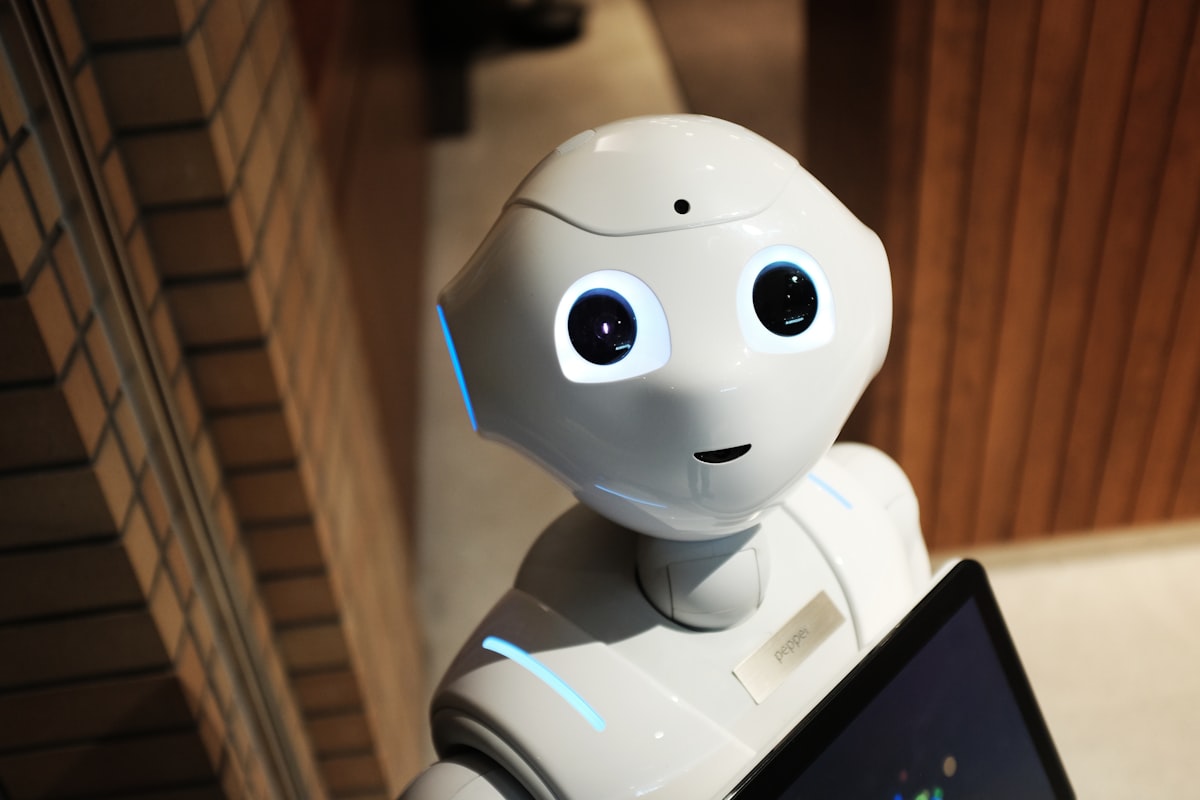
The dream of creating artificial minds is as old as human civilization itself. Long before computers existed, philosophers, engineers, and storytellers imagined mechanical beings that could think, speak, and reason. The actual science of artificial intelligence, however, is only about 70 years old — and the past decade has compressed more progress into ten years than the previous six decades combined. This is the complete story of how we got here.
Ancient and Medieval Automata: The Fantasy of Mechanical Life
The earliest recorded discussions of artificial beings appear in ancient Greek mythology. Hephaestus, the god of the forge, was said to have crafted golden maidens with intelligence and speech who assisted him in his workshop. The giant bronze automaton Talos was described as patrolling the shores of Crete, throwing boulders at enemy ships. These were not science fiction in the modern sense — they were genuine philosophical explorations of what it would mean to create artificial life.
In the 13th century, the polymath Roger Bacon described the possibility of mechanical devices that could simulate human motion. The Renaissance polymath Leonardo da Vinci designed a mechanical knight around 1495 — a suit of armor with internal gears that could sit, wave its arms, and move its head. A full-scale reconstruction based on da Vinci's notebooks was built in 2002 and found to be fully functional. This was not yet AI, but it was the first serious engineering attempt at a humanoid machine.
By the 18th century, European craftsmen were building extraordinary automata — mechanical figures capable of playing chess, drawing portraits, and playing musical instruments. The most famous was Wolfgang von Kempelen's "The Turk" (1770), a chess-playing machine that toured Europe and defeated Napoleon Bonaparte and Benjamin Franklin. It was later revealed to be a hoax — a human chess master hidden inside — but it sparked genuine debate about whether machines could ever think.
Ada Lovelace and Charles Babbage: The First Algorithm
The foundation of modern computing — and by extension, AI — was laid in the 1830s by Charles Babbage and Ada Lovelace. Babbage designed the Analytical Engine, a general-purpose mechanical computer that was never fully built due to funding and engineering challenges. Ada Lovelace, working from Babbage's notes, wrote what historians widely recognize as the world's first computer program: an algorithm for computing Bernoulli numbers on the Analytical Engine.
More importantly, Lovelace grappled with the question of machine intelligence directly. She wrote that the Analytical Engine "has no power of originating anything. It can only do what we know how to order it to perform." This distinction — between computation and genuine intelligence, between executing instructions and understanding — remains one of the central debates in AI philosophy nearly 200 years later.
Alan Turing and the Birth of Computer Science (1936–1950)
The modern scientific foundation for artificial intelligence was built by Alan Turing. In 1936, Turing published "On Computable Numbers," introducing the concept of the Turing Machine — an abstract model of computation that proved any algorithm could be executed by a sufficiently powerful mechanical process. This was the theoretical foundation for every computer ever built.
During World War II, Turing led the team at Bletchley Park that cracked the Nazi Enigma cipher, using electromechanical computing machines called "Bombes." His work is estimated to have shortened the war by two to four years and saved between 14 and 21 million lives — making him arguably the most consequential scientist of the 20th century.
In 1950, Turing published "Computing Machinery and Intelligence" in the journal Mind. It opened with a question that echoes through AI research to this day: "Can machines think?" Rather than attempting to define thinking, Turing proposed an operational test — the Imitation Game, now known as the Turing Test. A machine passes the test if a human evaluator cannot distinguish its text responses from those of a human. While deeply controversial as a measure of intelligence, the Turing Test framed the ambitions of an entire generation of AI researchers.
The Founding of AI as a Discipline: Dartmouth 1956
The field of Artificial Intelligence was formally born at a summer workshop at Dartmouth College in 1956. The proposal, written by John McCarthy, Marvin Minsky, Nathaniel Rochester, and Claude Shannon, stated: "We propose that a 2-month, 10-man study of artificial intelligence be carried out during the summer of 1956 at Dartmouth College... The study is to proceed on the basis of the conjecture that every aspect of learning or any other feature of intelligence can in principle be so precisely described that a machine can be made to simulate it."
The confidence was extraordinary. McCarthy — who coined the term "Artificial Intelligence" — and his colleagues believed they were a summer away from solving intelligence. Instead, the Dartmouth workshop produced a loose community of researchers who would define AI research for the next two decades, working primarily through symbolic methods: manipulating symbols according to explicit logical rules.
The 1950s and early 1960s saw remarkable early successes. Arthur Samuel's checkers-playing program (1952) was one of the first programs to learn from experience. The Logic Theorist (1956) proved 38 of the first 52 theorems in Whitehead and Russell's Principia Mathematica. The General Problem Solver (1957) was an early attempt at a universal problem-solving AI.
The First AI Winter (1974–1980)
By the early 1970s, the gap between AI's ambitious promises and its actual capabilities had become impossible to ignore. The Lighthill Report (1973), commissioned by the British government, devastatingly criticized AI research for producing nothing of real-world use despite massive investment. US and UK government funding was slashed. This was the first "AI Winter" — a period of reduced funding, pessimism, and abandoned research programs.
The fundamental problem was that symbolic AI methods — hand-coded rules and logic — worked beautifully on toy problems but scaled terribly to the complexity of the real world. The "combinatorial explosion" of possibilities made exhaustive search impossible. Early machine translation systems that worked reasonably on simple sentences completely failed on real text. Chess programs played weak chess because they couldn't evaluate positions deeply enough.
Expert Systems and the Second AI Winter (1980–1993)
AI found commercial success in the 1980s through expert systems — programs that encoded the knowledge of human experts as thousands of "if-then" rules. MYCIN (1976) could diagnose bacterial blood infections with 69% accuracy, outperforming medical students and matching specialists. XCON (1980) saved DEC $40 million annually by configuring VAX computers. Companies spent billions on AI hardware — especially LISP machines — designed specifically to run expert systems.
But expert systems had a fatal flaw: they required human experts to manually encode their knowledge into rules. This was extraordinarily expensive, brittle (rules conflicted), and couldn't adapt to new situations. By the late 1980s, the cost of maintaining expert systems exceeded their value. The LISP machine companies collapsed. The second AI winter arrived, lasting until the mid-1990s.
Something important did happen during this period, however: the backpropagation algorithm for training neural networks was popularized by Rumelhart, Hinton, and Williams in 1986. This paper planted the seeds of the deep learning revolution that would bloom 25 years later.
The Statistical Revolution and Machine Learning (1990s–2000s)
The field pivoted in the 1990s from hand-coded rules to statistical learning from data. Key milestones:
- 1997: IBM's Deep Blue defeats world chess champion Garry Kasparov — the first time a computer beat the reigning world chess champion under standard tournament conditions.
- 1998: Yann LeCun's LeNet-5 convolutional network reads handwritten zip codes for the US Postal Service — the first large-scale practical use of deep learning.
- 2001: Random Forests invented by Leo Breiman — a powerful ensemble method that dominated structured data tasks for a decade.
- 2002: Roomba autonomous vacuum robot launches, reaching millions of homes and normalizing simple AI-powered autonomy in everyday life.
- 2006: Geoffrey Hinton coins the term "deep learning" and demonstrates that deep belief networks can be trained layer-by-layer, reigniting interest in neural networks.
- 2009: Fei-Fei Li launches ImageNet — a dataset of 14 million labeled images across 22,000 categories. This would become the catalyst for the deep learning revolution.
The Deep Learning Revolution (2012–2017)
The 2012 ImageNet competition changed everything. Alex Krizhevsky's AlexNet — a deep convolutional network trained on two GTX 580 GPUs — achieved a top-5 error rate of 15.3%, compared to the runner-up's 26.2%. This margin was so large that the entire computer vision field immediately abandoned classical methods. Every major tech company launched emergency deep learning research programs.
The years that followed produced a cascade of breakthroughs. In 2014, Ian Goodfellow invented Generative Adversarial Networks, enabling AI to generate photorealistic images. In 2015, Google's Deep Dream revealed that CNNs were learning genuinely interpretable visual features. Also in 2015, ResNet introduced residual connections, enabling networks 100+ layers deep. In 2016, AlphaGo defeated world Go champion Lee Sedol — a feat considered impossible just years earlier.
The hardware that enabled all of this was NVIDIA's GPU ecosystem. The same chips designed to render video game graphics could accelerate the massive matrix multiplications at the heart of neural network training. NVIDIA's market capitalization grew from $8 billion in 2012 to over $3 trillion in 2024 — the greatest increase in corporate value in history.
The Transformer Era (2017–Present)
In June 2017, a team at Google Brain published "Attention Is All You Need" — introducing the Transformer architecture. Originally designed for machine translation, the Transformer's self-attention mechanism enabled processing entire sequences in parallel and capturing long-range dependencies that RNNs couldn't. Within two years, Transformers had conquered NLP. Within five years, they were conquering computer vision, protein structure prediction, code generation, and music synthesis.
The scaling era began: researchers discovered that simply making Transformers larger and training them on more data produced reliably better results. OpenAI's GPT series demonstrated this dramatically: GPT-1 (2018, 117M params) → GPT-2 (2019, 1.5B params) → GPT-3 (2020, 175B params) → GPT-4 (2023, estimated 1.8T params). Each generation was qualitatively more capable in ways that surprised even the researchers who built them.
In November 2022, OpenAI launched ChatGPT. It reached 100 million users in 2 months — the fastest product adoption in history. Google, Microsoft, Meta, Amazon, Apple, and every major tech company immediately restructured their strategies around large language models. The question was no longer "Can AI think?" but "What can't AI do?"
Where We Are Now and What's Coming
As of 2026, AI systems can write code, pass bar exams, generate photorealistic video from text descriptions, control laboratory robots to run experiments autonomously, and engage in multi-hour complex reasoning. The capabilities are advancing faster than most regulatory, educational, or ethical frameworks can respond to.
Key active frontiers include: multimodal models that seamlessly combine text, vision, and audio; reasoning models that "think" for extended periods before responding; agentic systems that browse the web and use software autonomously; and the long-elusive goal of artificial general intelligence — a system with human-level flexibility across all cognitive tasks.
Whether AGI arrives in 5 years, 50 years, or never remains genuinely contested among leading researchers. What's not contested is that the systems we have today are already transforming medicine, education, science, art, and the economy — and that understanding how they work is no longer optional for anyone who wants to participate meaningfully in the modern world.
- The Dream Machine — M. Mitchell Waldrop (biography of J.C.R. Licklider and the founding of computing)
- Turing's Vision — Chris Bernhardt (accessible introduction to Turing's ideas)
- The Alignment Problem — Brian Christian (AI safety explained accessibly)
- Genius Makers — Cade Metz (inside story of the deep learning revolution)
Reviewed by the Synapse Editorial Team
Last Updated: July 2026. Our content is rigorously reviewed by computer science educators and industry professionals to ensure accuracy, objectivity, and educational value.